Hangman and the pursuit of an Archetype
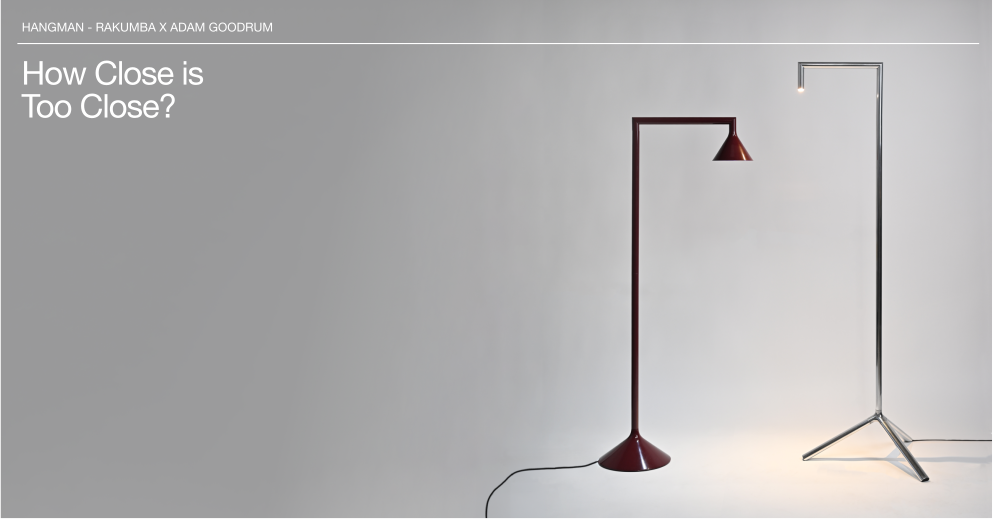
Floor Uplighter by Lex Pott for IKEA 2026 (Left) | Hangman Floor Lamp by Rakumba & Adam Goodrum 2021 (Right)
The line between influence and authorship is one designers learn to read early in their careers. It is never perfectly straight. It shifts with culture, with category, and with the passage of time. And it sometimes forces the question: “How close is too close?”
Designing within the same archetype inevitably brings ideas into close proximity - and proximity, in design, is rarely neutral.
Rakumba’s Hangman was designed by Adam Goodrum and launched in 2021, the culmination of a long, collaborative process of ideation, innovation, prototyping and refined engineering. Conceived as a drawn line in space, Hangman is a lighting object that behaves like a gesture. It takes its cue from the analogue word game of Hangman - simple marks that accumulate into a character - and translates that nostalgia into articulated arms that can be repositioned into myriad configurations. At the end of the arm sits a refined light source: a polished, glowing tip that reads like punctuation.
Hangman’s form is inseparable from its function: a table, floor and pendant that invites people to compose with it. The care in its design is evident; a joint, unrestricted in position, that stays fully resolved, beautiful at any angle you set it.
IKEA’s new PS 2026 floor uplighter operates in a similar register. A vertical spine with the same pair of adjustable joints that can be bent and twisted to direct light as uplight, reading light or wall wash. It is pragmatic, playful, priced for ubiquity; badged “New”, and described by the designer as “almost like an archetype lamp”.
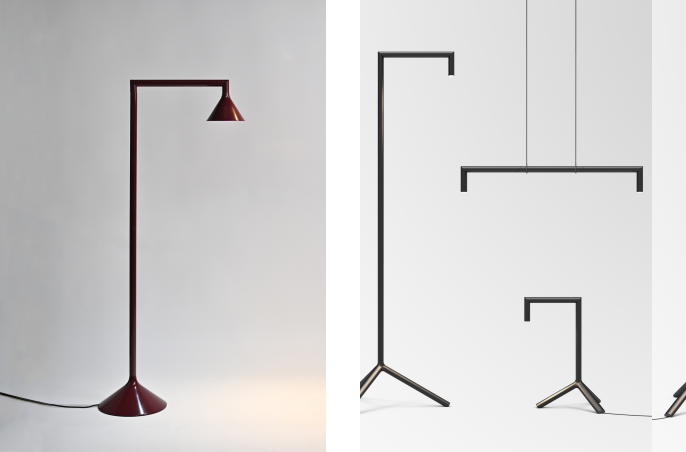
Floor Uplighter (Left) | Hangman Family (Right)
“For designers, there is a quiet unease when a concept they have developed emerges elsewhere in a form that feels strikingly familiar.”
This is where the story gets interesting…
When a design archetype created by an accomplished Australian designer, working with a brand known for originality and innovation, suddenly appears at global scale, what exactly does that signal? Uncomfortable questions emerge:
How should a designer feel when a form factor they pioneered surfaces elsewhere in the market?
How should they respond when the parallels are being openly discussed within the design community?
Does the profession rely on an unwritten code to protect originality - and is formal design protection a fair expectation?
Strong archetypes draw others toward them: the more resolved and intuitively readable a form becomes, the more it invites company.
For designers, there is a quiet unease when a concept they have developed emerges elsewhere in a form that feels strikingly familiar.
Yet recognition in design is complicated. Objects are public. Typologies are shared. The same constraints steer different studios toward similar solutions: joints exist because arms must move; light sources are positioned to illuminate effectively. Hangman, too, stands on the shoulders of a century of articulated lamps; originality has never meant starting from nothing - it’s about
what you add.
But there is a difference between sharing a typology and sharing a silhouette.
A jointed, repositionable lamp is a typology; the particular articulated form - the proportions, the upright line, the distinctive shapes the arm holds as you configure it - is an authorship. That configurable form is the most recognisable thing about Hangman, and it is precisely the gesture the PS 2026 uplight floor lamp puts at the centre of its marketing.
If something in the Hangman story is clearly authored, it is that articulated, configurable line - the shape you set, not only the joints that allow it.
So when proximity itself becomes a story, it is worth asking: how close is too close when an object’s identity lives in its proportions, its articulation, its posture?
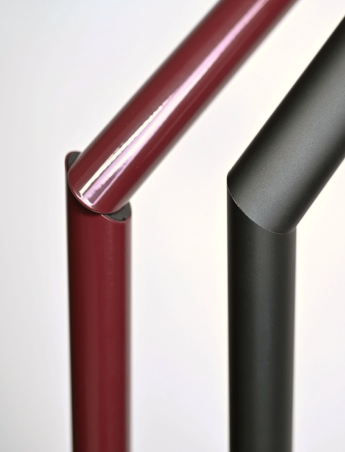
Floor Uplighter (Left) | Hangman Floor Lamp (Right)
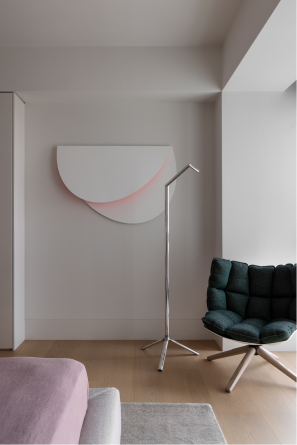
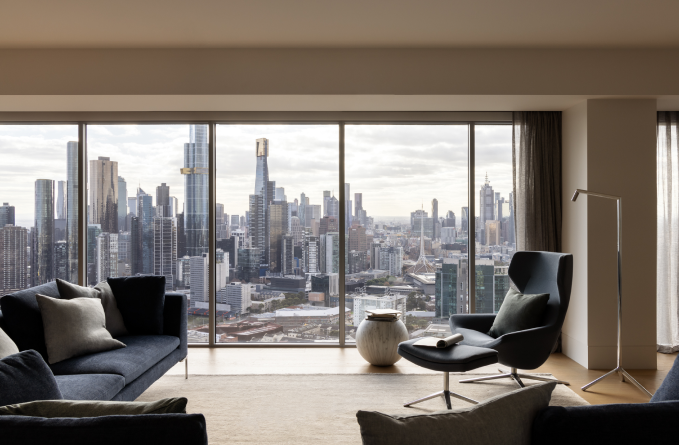
Hangman Floor Lamp. Images: Timothy Kaye. Interiors: Studio x us
The Due-diligence Question
When designing new products, designers and brands should ask, early and honestly: what already exists in the world? When a solution starts to look familiar, there’s a responsibility to interrogate that familiarity.
If an object is presented as new - marketed on novelty, framed as a fresh idea - then it must earn that claim through a contribution that acknowledges the archetype and moves it forward.
“When entering an existing design territory, a new interpretation can’t just be louder.”
History shows that shared territory can be fertile ground, when entered with intent.
In the 1920s, Mart Stam pioneered the cantilever chair concept using straight pipes meeting at discrete junctions. When Ludwig Mies van der Rohe encountered the design, he didn't copy it; he refined the engineering, introducing the elegant, seamlessly curved tubes that perfected the form. The subsequent explosion of tubular steel furniture proved that while ideas can spread rapidly, real contribution improves an existing archetype and pushes it somewhere new.
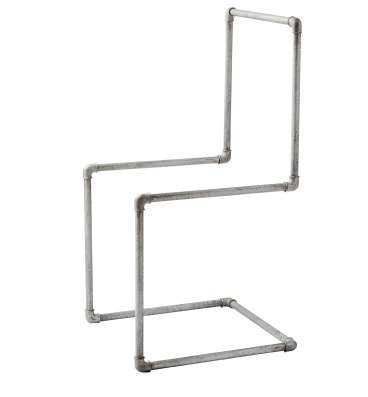

Weissenhof chair by Lilly Reich and Mies van der Rohe, 1927 (Left) Cantilever chair B55 by Mart Stam, 1926 (Right) Image: Thonet.de.
When entering an existing design territory, a new interpretation can’t just be louder. It needs to be clearer. More resolved. More innovative. Better.
We sometimes describe moments like this as an echo.
Design is a long dialogue conducted through objects. Ideas are spoken, and they come back to us - sometimes quoted, sometimes circulating further than the original.
But in any dialogue there is a difference between an echo and a reply. An echo repeats - a little later, a little less clear. A reply takes what was said and moves it forward. Van der Rohe didn’t echo Stam; he replied to him. So the test isn’t whether an idea travels - ideas always travel. The test is what comes back: an echo, or a reply?
That is the debate we think the design community is ready for. It doesn’t deny that ideas travel. It doesn’t demand the myth of total originality. And it doesn’t let scale become a free pass.
Hangman staked its place in the industry in 2021. With a design provenance of one of Australia’s most celebrated designers and sold around the world, its authorship is real, documented, and embodied in the object. The design’s excellence earned widespread coverage and won a Good Design Award and a WILD Design Award, and was longlisted for the Dezeen Awards in 2022. We don’t raise that to keep score; we raise it because authorship is easiest to talk about when it’s on the record - and because an Australian design language resonating at this scale is something the whole local industry has a stake in. The conversation we want isn’t about a trophy cabinet. It’s about what we owe one another when an archetype travels.
Not in the sense of a verdict, but in the sense of a question that remains open.
Because the real question isn’t whether a global brand can have its own take on an archetype. Of course it can. The question is subtler, and more enduring:
How close is too close? And what should be done when the pursuit of a shared archetype brings a design too close to another original work?
If the answer is not obvious, that’s precisely why the design community should debate it.
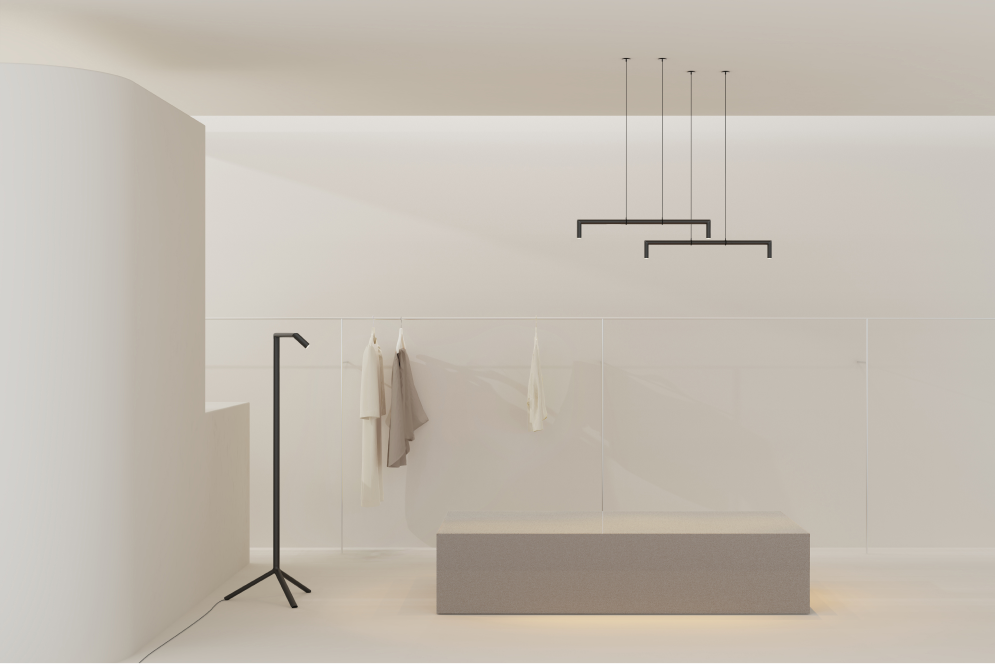
Hangman Family: Floor & Pendant Lamp


.png)

